Now Open: The Centers’ Glick Recovery Campus →Learn More
2025 Impact Report
Program Impact
Healing
Integrated Health & Wellness
Healing Through Whole-Person Care
As one of Cleveland’s six Federally Qualified Health Centers (FQHC), The Centers provided integrated, holistic primary and behavioral health care to children and adults without regard for their insurance status or ability to pay. Our integrated health services are designed to address both physical and behavioral health needs through coordinated care. We work for better health care access and outcomes, enabling individuals and families in Cleveland to lead healthier lives.
2025 Executive Summary: By the Numbers
Children and Adults Served
13,806
MAT Access
559
new clients served through our walk-in Medication for Addiction Treatment (MAT) clinics
Supported
634
clients with schizophrenia spectrum disorders, nearly doubling those served from 2024
Case Management
52%
increase in behavioral health clients receiving case management compared to 2024
Began providing behavioral health services to youth in
8
local schools
Nearly
3,300
BHUC visits
Our patients with HIV experienced a
90%
suppression rate
Naloxone kits
4,630
distributed to clients to prevent overdoses
Prevented nearly
70%
of BH and Psychiatry clients from a hospital readmission
Spotlight on WinMat
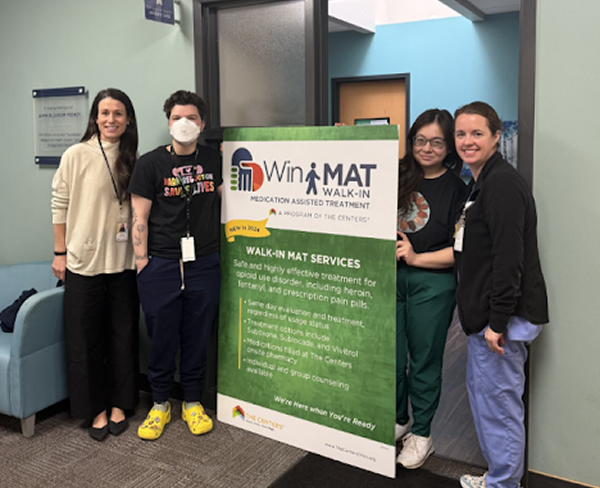
In April 2025, we were proud to expand Walk-in Medication for Addiction Treatment (WinMAT) to a second site at our Uptown health center. WinMAT provides low barrier medical treatment for people with opioid use disorder, seeing patients for same-day walk-in visits.
In addition to serving as an entry to care for individuals seeking services for the first time, WinMAT also serves as a safety net for our existing patients who miss a scheduled appointment or those who are better served by the flexible, walk-in model. The WinMAT model emphasizes comprehensive care: in addition to Hepatitis C treatment, patients seen in WinMAT are also offered screening and treatment for primary care conditions such as diabetes, hypertension, cholesterol, kidney disease, sexually transmitted infections, HIV, and cancer, as well as mental health screening and treatment for conditions such as depression, anxiety, PTSD, and schizophrenia.
Substance Use Disorder (SUD) Enhancements
Our SUD team added many after-care groups in 2025, including stress management using yoga, creative groups using art interventions, music interventions, and specialized group therapies specific to trauma, grief, and self-esteem.
We also outgrew our SUD group room in 2025, moving it to a larger space. Built on donations, repurposed furniture, and client art projects, the SUD team converted the old group room into a “coffee shop,” with tables and coffee shop décor, setting up bookshelves with recovery books and supplying coloring books and other craft items. Clients have become accustomed to dropping in early for group and having coffee together, which increases socialization among the clients and gives them a safe, sober place to hang out.
Paying it Forward
Highlighting how using The Centers’ pharmacies pay it forward by saving money for both our clients and for our organization, we successfully implemented an initiative to link more clients and the communities surrounding our clinics to our in-house pharmacies. In 2025, The Centers’ pharmacies filled prescriptions for more than 2,100 unique clients per month, an increase of more than 18% compared to 2024.
Improving Prevention Services
Our Nursing team launched Medicare Annual Wellness Visits, which play a key part in reducing risk for common preventable health related problems. Clients are now greeted by a nurse who completes the majority of the visit, and through inquiry performs a health risk assessment, Mini-Cog, and review any health maintenance needs such as vaccines and screenings for various cancers. The team also identifies any safety concerns within the home, as well as access to basic needs. This has increased nursing visit options for hypertension, diabetes, healthcare maintenance, and medication education. Nursing visits are available at all locations to address a variety of supports that can be offered through educational engagements.
Access to Cancer Screenings
Our SUD team added many after-care groups in 2025, including stress management using yoga, creative groups using art interventions, music interventions, and specialized group therapies specific to trauma, grief, and self-esteem.
We also outgrew our SUD group room in 2025, moving it to a larger space. Built on donations, repurposed furniture, and client art projects, the SUD team converted the old group room into a “coffee shop,” with tables and coffee shop décor, setting up bookshelves with recovery books and supplying coloring books and other craft items. Clients have become accustomed to dropping in early for group and having coffee together, which increases socialization among the clients and gives them a safe, sober place to hang out.
Stories of Hope
The Centers is my medical home. I have been a client for over seven years. But The Centers is more than a medical practice, it is a community… a family of caring, knowledgeable, empathetic, and professional providers. Clients are treated with respect and are supported with dignity on their journey to good health.
Seven years ago, those practitioners literally saved my life. The Substance Use Disorder team, along with my peers, facilitated my journey toward good physical and mental health. I was finally willing to accept the diagnosis of post-traumatic stress, and in that moment, I surrendered and my healing truly began.
In October, I celebrated seven years of being joyful, happy, and free. Inspired by The Centers, I am also now a licensed peer support professional! Once again, thank you Centers – you all are truly my family!
Five years ago, Natalie moved to Cleveland during a manic episode. Shortly after finding an apartment, she was hospitalized under a probate order, which immediately put her at risk of eviction. However, in 2022, she began outpatient treatment for herschizophrenia spectrum disorder at The Centers. Supported by ourSTARS team, Natalie found stable alternative housing and remained consistent in her treatment. By 2025, she reported that while she still experiences delusions, their intensity has significantly decreased, and she is actively building her self-esteem. Thanks to the compassionate, consistent care from our staff, Natalie is successfully managing her illness and building a self-sufficient life.